Get in Touch
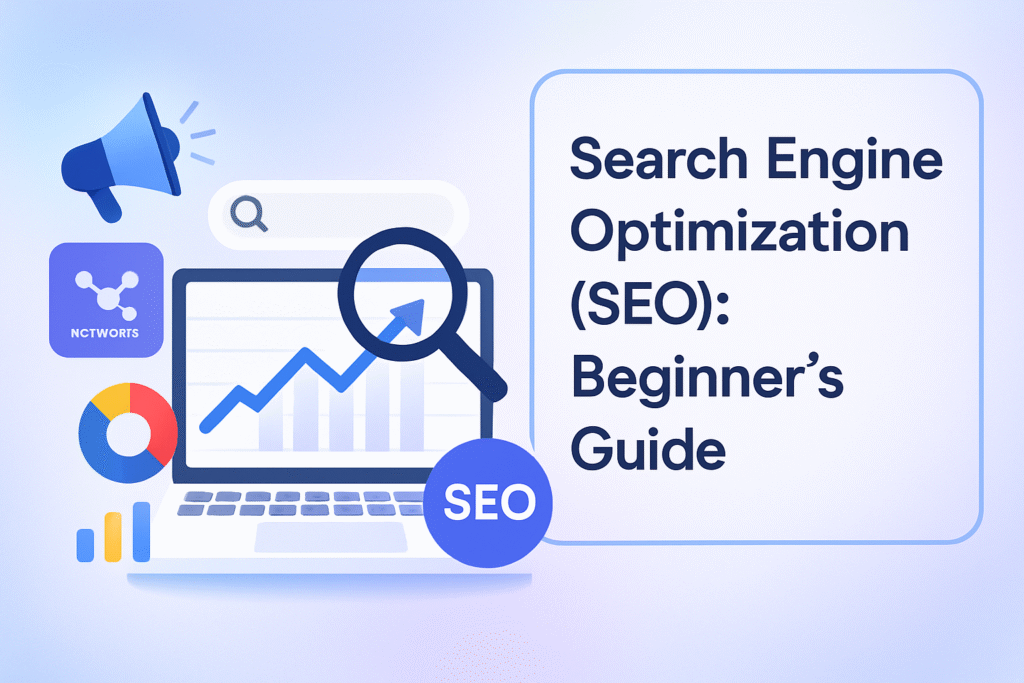
Search Engine Optimization ( SEO ): Beginner’s Guide
- Admin
- 06-01-2026
SEO, SEO, SEO — it’s everywhere! You’ve probably heard about it from friends, family, or online sources. You have come to the right place to learn all about it.
Search engine optimization is the practice of improving your website to increase its visibility when people search for products, services, or information related to your business on search engines like Google, Bing, and others.
The better visibility your pages have in search results, the more likely you are to attract attention and draw prospective and existing customers to your business.
If you’re new to SEO, this guide will walk you through what SEO is, why it matters, how search engines work, the main pillars of SEO, and a complete step-by-step SEO guide to start optimizing your website effectively.
What Is SEO and Why Does It Matter?
SEO stands for Search Engine Optimization. It means improving your website using different SEO strategies and techniques so it can rank higher on search engines like Google and Bing—without paying for ads (this is called organic ranking).
SEO started in the mid-1990s, when the first search engines appeared. At that time, website owners mainly focused on adding keywords and meta tags so search engines could find their pages easily. This is how SEO first began.
Over the years, SEO has evolved. Today, search engines don’t just look at keywords. They focus more on content quality, website authority, and user experience—basically, how well a website answers a user’s question and matches their intent.
Let’s understand with the Example the about SEO more deeply to help you better understand it.
Imagine you own a small bakery in Surat and you create a website for it.
Without SEO:
Your website just says: “Welcome to our bakery.
- No clear keywords
- No helpful content
👉 Result: Google doesn’t understand what your website is about, so it doesn’t rank well.
With SEO:
You optimize your website by:
- Using keywords like “Best bakery in Surat
- Writing helpful content like “How to choose fresh cakes for birthdays
- Adding clear page titles and descriptions
- Making the site fast and mobile-friendly
👉 Result: Now results are opposite – When someone searches “best bakery in New York, Google understands your website and shows it higher in search results.
Google processes over 8.5 billion searches per day, which means billions of people are actively asking questions, comparing options, and looking for solutions every single day. If your business does not show up in those moments, you simply do not exist for most of those potential customers.
However, research shows that the top three organic search results receive over 50% of all clicks, while results beyond the first page receive less than 1% of clicks. This makes ranking well essential for driving traffic to your site.
Unlike paid advertising, which stops delivering results the moment you stop paying, SEO builds long-term, sustainable visibility without investing a daily amount. A well-optimized page can continue attracting visitors for months or even years after publication.
How Search Engines Work
Before diving into SEO tactics, it’s important to understand how search engines operate. The process involves three main stages:
- Crawling is when search engines use bots to find new or updated web pages. These bots move from one page to another by following links.
- Indexing is what happens after crawling. The search engine stores the page’s content in its database so it can show the page in search results later.
- Ranking is the final stage where the search engine determines which pages from its index are most relevant to a user’s query and in what order they should appear.
- Google uses 200+ ranking factors to decide which websites should appear at the top. Each factor has its own importance, and all of them are designed to give users the best and most helpful results.
The Three Pillars of SEO
Effective SEO rests on three foundational pillars that work together to improve your search visibility.
Technical SEO
Technical SEO ensures that search engines can properly crawl, index, and understand your website. This includes optimizing your site’s infrastructure and backend elements.
Key technical factors include site speed, mobile-friendliness, secure connections (HTTPS), XML sitemaps, and proper site architecture. For example, Google reports that 53% of mobile users abandon sites that take longer than three seconds to load. This makes page speed both a user experience issue and a ranking factor.
A clean URL structure also matters. Compare these two URLs:
- example.com/products/organic-coffee-beans
- example.com/index.php?product_id=12847&category=beverages
The first URL is descriptive and user-friendly, making it easier for both people and search engines to understand the page content.
On-Page SEO
On-page SEO involves optimizing individual web pages to rank higher and earn more relevant traffic. This includes both the content visible to users and the HTML source code.
Content quality is paramount. Your content should be comprehensive, accurate, and genuinely helpful to your target audience. Google’s algorithm updates increasingly prioritize what they call E-E-A-T: Experience, Expertise, Authoritativeness, and Trustworthiness.
Keyword optimization means naturally incorporating relevant search terms that your audience uses. If you run a bakery in Surat, you’d want to optimize for terms like “Surat bakery,” “fresh bread Surat,” or “custom cakes near me.” However, keyword stuffing—unnaturally cramming keywords into content—will hurt rather than help your rankings.
Title tags and meta descriptions are HTML elements that appear in search results. A compelling title tag might be “Organic Coffee Beans | Freshly Roasted | Free Shipping” while the meta description elaborates: “Discover our selection of ethically sourced, freshly roasted organic coffee beans. Order today and enjoy free shipping on orders over $50.”
Header tags (H1, H2, H3, etc.) structure your content hierarchically, making it easier to read and helping search engines understand your page organization. Your H1 should clearly state what the page is about, while H2s and H3s break down subtopics.
Internal linking connects pages within your website, helping search engines discover more of your content while guiding users to related information. For example, a blog post about “coffee brewing methods” might link to your product pages for French presses and pour-over equipment.
Off-Page SEO
Off-page SEO refers to actions taken outside your own website to impact your rankings. The most important off-page factor is backlinks—links from other websites to yours.
Search engines view backlinks as votes of confidence. When reputable websites link to your content, it signals that your information is valuable and trustworthy. However, not all links are equal. A link from The Hindustan Times carries far more weight than a link from a newly created, unknown local blog.
Quality trumps quantity. According to a Backlinko analysis of 11.8 million Google search results, the number of domains linking to a page correlated strongly with higher rankings. But getting 100 low-quality links won’t help as much as earning 10 high-quality links from authoritative sites in your industry.
Building backlinks naturally requires creating content worth linking to: original research, comprehensive guides, helpful tools, or unique insights. You might also earn links through guest posting, digital PR, or building relationships with industry influencers.
How To Do SEO: Complete Step-by-Step Guide
Implementing SEO effectively requires following a systematic process. Here’s the complete SEO workflow broken down into actionable steps. Each step builds on the previous one to create a comprehensive optimization strategy.
Step 1: Keyword Research
Keyword research identifies the terms and phrases your target audience uses when searching for information, products, or services you offer. This foundational step guides all your other SEO efforts.
Start by brainstorming seed keywords related to your business. For a fitness coaching service, seeds might include “personal training,” “workout plans,” or “nutrition coaching.” Use keyword research tools to expand your list—free options include Google Keyword Planner, while paid tools like Ahrefs, SEMrush, and Moz offer deeper insights.
When evaluating keywords, consider search volume (monthly searches), keyword difficulty (competition level), and search intent (what the searcher actually wants). Someone searching “what is SEO” wants educational content, while someone searching “hire SEO consultant Chicago” is ready to purchase services.
Focus on long-tail keywords – longer, more specific phrases like “beginner weight training program for women over 40” – when starting out. These have less competition and often convert better because they match specific user intent.
Step 2: Analyze the Competition
Before creating content, examine what’s already ranking for your target keywords. Search your primary keywords and study the top 10 results. What type of content are they publishing? How comprehensive is it? What’s their content format—blog posts, product pages, videos, or interactive tools?
Look at their title tags, content structure, word count, and media elements. Check their backlink profiles using tools like Moz Link Explorer or Ahrefs to understand their authority level. This competitive analysis reveals what you need to create to compete and helps identify content gaps you can fill.
Pay attention to SERP features too—are there featured snippets, knowledge panels, or “People Also Ask” boxes? These represent opportunities to capture additional visibility.
Step 3: Create and Optimize Quality Content
Content creation is where your keyword research meets user needs. Write comprehensive, helpful content that genuinely answers searcher queries and provides value beyond what’s currently ranking.
Structure your content with clear H1, H2, and H3 headings that include relevant keywords naturally. Your title tag should be compelling and include your primary keyword, keeping it under 60 characters. Write a meta description under 155 characters that entices clicks from search results.
Incorporate your target keywords naturally throughout the content, especially in the first paragraph, headings, and naturally throughout the body. Include related terms and synonyms rather than repeating the same keyword. Add internal links to other relevant pages on your site and authoritative external links to support your claims.
Use multimedia elements like images, videos, and infographics to enhance understanding. Optimize all images with descriptive file names and alt text that help search engines understand visual content.
Step 4: Technical SEO Optimization
Technical SEO ensures search engines can crawl, index, and understand your website without obstacles. Start by improving your site speed—compress images, minimize CSS and JavaScript, and leverage browser caching. Google’s PageSpeed Insights provides specific recommendations.
Ensure your website is mobile-responsive since Google uses mobile-first indexing. Implement HTTPS security with an SSL certificate, as this is a confirmed ranking factor and builds user trust.
Create and submit an XML sitemap to Google Search Console and Bing Webmaster Tools. This helps search engines discover all your important pages. Set up a robots.txt file to guide crawler behavior and use canonical tags to prevent duplicate content issues.
Fix broken links, improve URL structure (use descriptive, keyword-rich URLs), and implement proper schema markup to help search engines understand your content context. Schema.org provides structured data formats for various content types.
Step 5: Build Your Site Architecture
A logical site structure helps both users and search engines navigate your website effectively. Organize content into clear categories and subcategories, ensuring every page is accessible within 3-4 clicks from your homepage.
Create a flat architecture where possible, meaning fewer levels between your homepage and deepest pages. Use descriptive navigation menus and breadcrumb navigation to show users (and search engines) where they are within your site hierarchy.
Implement strategic internal linking to distribute page authority throughout your site and guide users to related content. Every important page should have multiple internal links pointing to it from relevant pages.
Step 6: On-Page SEO Elements
Beyond content, optimize all on-page elements that influence rankings. Craft unique, compelling title tags for every page that include target keywords and stay within 50-60 characters. Write unique meta descriptions for each page that encourage clicks while summarizing page content.
Use header tags (H1-H6) hierarchically to structure content logically. Each page should have one H1 tag that clearly states the topic, with H2s and H3s organizing subtopics. Optimize your URL slugs to be short, descriptive, and keyword-rich.
Add alt text to all images describing what they show, which helps search engines understand visual content and improves accessibility. Use descriptive anchor text for internal links rather than generic phrases like “click here.”
Step 7: Off-Page SEO and Link Building
Off-page SEO, primarily link building, establishes your website’s authority and trustworthiness. Focus on earning high-quality backlinks from reputable websites in your industry.
Create link-worthy content like original research, comprehensive guides, helpful tools, or unique data visualizations that others naturally want to reference. Engage in digital PR by pitching stories to journalists and industry publications. Guest post on authoritative websites in your niche, providing valuable content in exchange for author attribution links.
Build relationships with industry influencers, participate in relevant online communities, and leverage broken link building—finding broken links on other sites and suggesting your content as a replacement.
Step 8: Local SEO (If Applicable)
For businesses serving local customers, optimize for local search visibility. Claim and fully optimize your Google Business Profile with accurate business information, categories, hours, photos, and regular posts.
Ensure your business name, address, and phone number (NAP) are consistent across your website and all online directories like Yelp, Yellow Pages, and industry-specific directories. Inconsistencies confuse search engines and can harm local rankings.
Encourage customer reviews on Google and other platforms, then respond to all reviews professionally. Create location-specific pages if you serve multiple areas, each with unique content about serving that community.
Build local citations (mentions of your business name and address) on relevant local directories and websites. Join local business associations and chambers of commerce for additional citation opportunities.
Step 9: Monitor, Measure, and Refine
SEO is an ongoing process requiring continuous monitoring and adjustment. Set up Google Analytics and Google Search Console to track performance metrics.
Monitor organic traffic trends, keyword rankings, click-through rates, bounce rates, and conversion rates. Identify which pages perform best and which need improvement. Use Search Console to find technical issues, track indexing status, and discover new keyword opportunities.
Conduct regular content audits every 6-12 months. Update outdated information, improve underperforming pages, and remove or redirect low-value content. Analyze competitor movements and algorithm updates that might affect your rankings.
Test different title tags, meta descriptions, and content approaches to continuously improve performance. SEO is iterative—use data to guide your optimization efforts and refine your strategy over time.
Step 10: Stay Updated with SEO Trends
Search algorithms constantly evolve with hundreds of updates annually. Stay informed by following the Google Search Central Blog for official announcements and guidance.
Follow reputable SEO industry publications like Search Engine Journal, Moz Blog, and Search Engine Land for news, case studies, and expert insights.
Participate in SEO communities, attend webinars and conferences, and continuously test new strategies. Focus on fundamental principles—creating quality content, providing excellent user experiences, and building genuine authority—which remain constant even as tactics evolve.
This systematic approach ensures you cover all essential SEO elements while building a sustainable, long-term optimization strategy.
Key Takeaway
Starting SEO doesn’t need a big budget or technical skills. Begin by checking your website using free tools like Google Search Console and PageSpeed Insights to fix basic issues.
Next, find keywords for your main pages using Google Keyword Planner. Then, optimize those pages with clear titles, descriptions, and helpful content.
Create and publish useful content regularly, and slowly build backlinks through quality content and outreach.
SEO takes time. Focus on consistency, value, and long-term improvement. Track results, make changes when needed, and with patience, your website’s organic traffic will grow.
If you need help, connect with a SuratSEOExpert—the best SEO company in Surat—offering result-oriented SEO services at affordable prices for new business owners and startups, without compromising on quality.

SuratSEOExpert
SuratSEOExpert is the Surat-based SEO agency, and our published content is written by our remote SEO content writing team, reviewed and guided by experienced SEO professionals. Every article is created with a clear focus on helping local businesses understand SEO, Google rankings, and online visibility in a simple and practical way.
Our team works closely with real client projects, so the content you read is based on hands-on experience, not theory. We cover topics like website SEO, Google Business Profile optimization, content marketing, link building, and local search strategies tailored for Surat businesses.
The goal of SuratSEOExpert is to share trustworthy, easy-to-understand SEO insights that help business owners make better digital marketing decisions and grow sustainably online.